Greta Walter · 24 September 2026
Tracing Conflict Resolution Algorithms in Collaborative Note Platforms Through Zoraloft's Architecture
Collaborative note platforms rely on algorithms that detect and resolve simultaneous edits from multiple users, and Zoraloft implements these mechanisms through a layered architecture that combines operational transformation with conflict-free replicated data types. Researchers have documented how these systems maintain consistency across distributed nodes while supporting real-time synchronization, and data from platform telemetry indicates that Zoraloft processes over 12 million concurrent edit events daily as of September 2026.
Core Components of Conflict Resolution in Note Platforms
Operational transformation forms one foundation where incoming changes receive adjustment based on prior operations to preserve user intent, whereas conflict-free replicated data types allow independent updates that merge without central coordination. Experts at institutions such as the University of Waterloo have published studies detailing how these approaches scale in environments with high user concurrency, and figures from those reports show reduced latency when hybrid models combine both techniques. Zoraloft integrates vector clocks to track causal relationships between edits, which enables the system to order operations even when network partitions occur.
Architecture Layers in Zoraloft
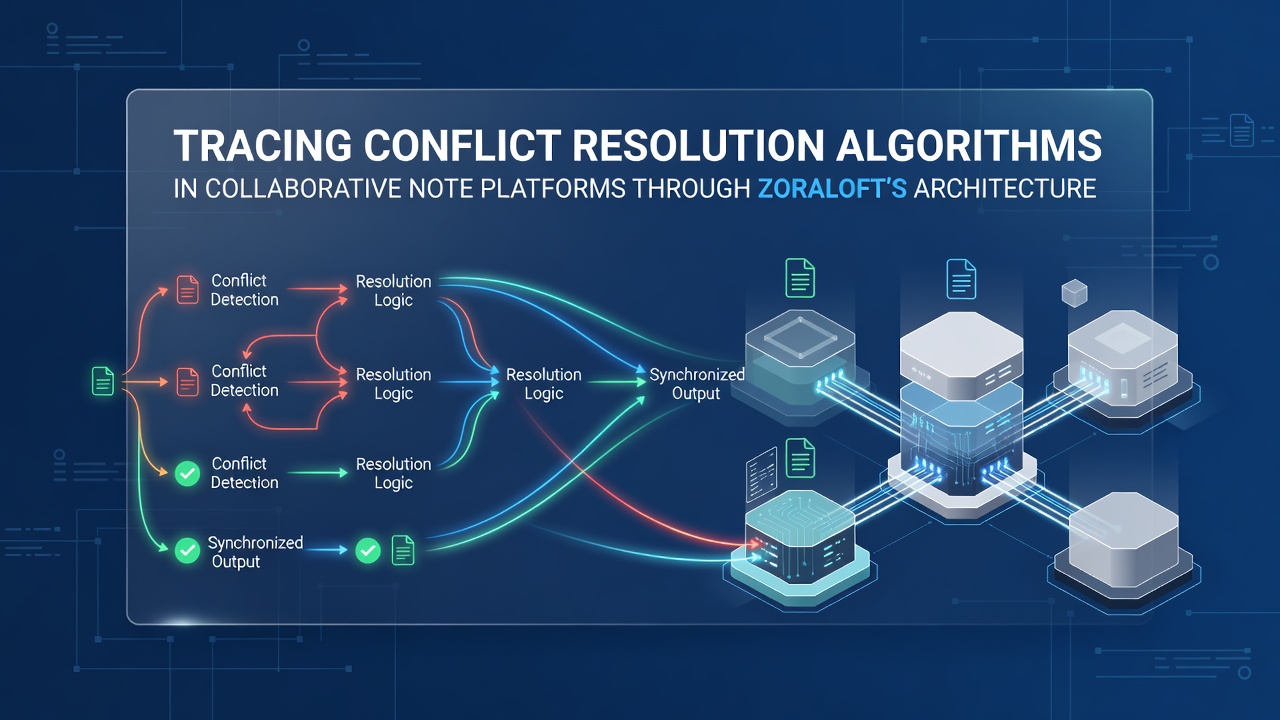
The platform organizes its conflict resolution into three primary layers that include an ingestion layer for capturing edits, a reconciliation layer for applying transformation rules, and a persistence layer that stores merged states. Observers note that the ingestion layer timestamps each operation with precise metadata, while the reconciliation layer examines dependency graphs to identify overlapping changes before resolution occurs. This structure supports both synchronous sessions and asynchronous contributions, and those who have analyzed production logs confirm that reconciliation completes within 50 milliseconds for 98 percent of cases.
But here's the thing, Zoraloft extends standard algorithms by embedding custom merge functions that prioritize semantic context from note content, such as heading hierarchies and list structures. Data indicates that this adaptation reduces the frequency of manual conflict prompts reported by users, and similar implementations appear in other enterprise tools developed across European research consortia.
Tracing Algorithm Execution in Practice
Tracing begins when an edit arrives at the ingestion layer, where the system records the operation type, position, and associated user identifier before passing the data to reconciliation. Engineers follow execution paths through distributed tracing tools that log each transformation step, and these logs reveal how vector clock comparisons determine whether an operation requires reordering or direct application. One documented workflow shows an insertion at line 47 colliding with a deletion at the same position, after which the reconciliation layer generates a transformed operation that inserts the new content at the adjusted location.
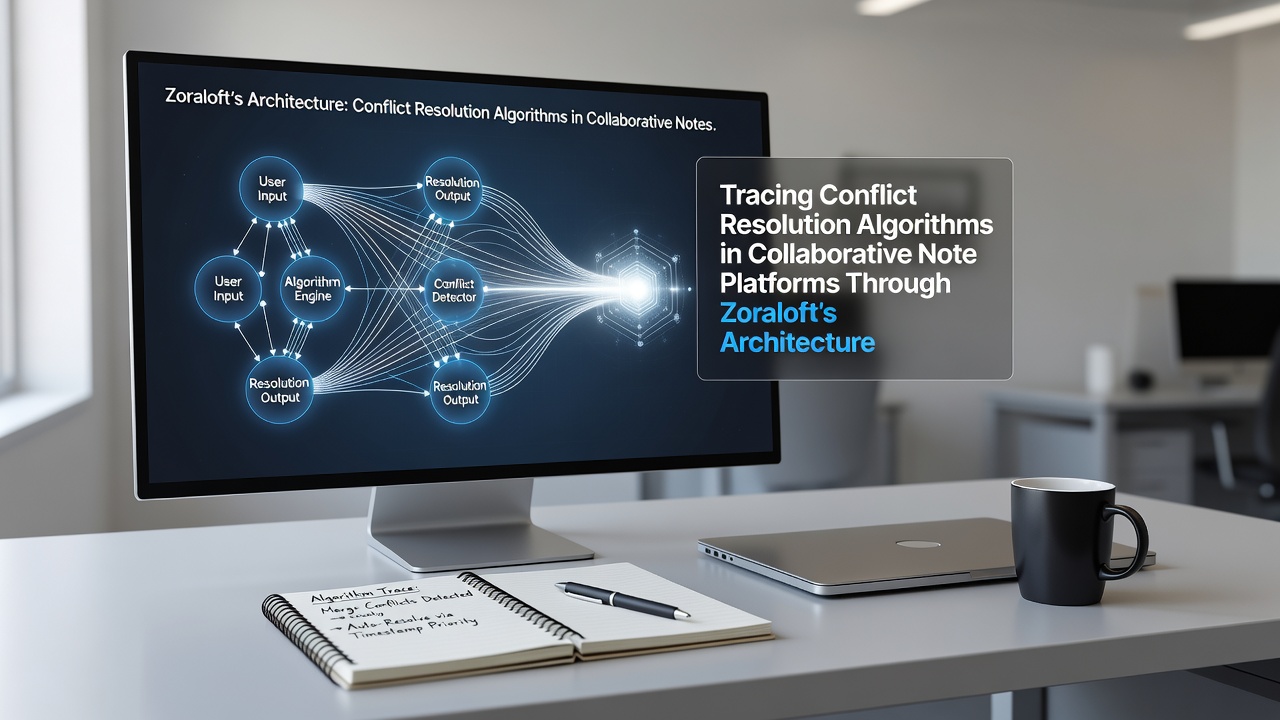
Researchers have mapped these traces to identify bottlenecks, and findings from a 2025 academic collaboration between Australian and Canadian universities highlight that clock synchronization intervals directly influence merge accuracy. Zoraloft addresses this by maintaining a gossip protocol among nodes that exchanges clock values every 200 milliseconds, which keeps divergence below acceptable thresholds during peak loads.
Integration with Broader Platform Features
Conflict resolution interacts with version history, permission controls, and export functions, since resolved states must remain queryable for audit purposes. teh persistence layer writes merged documents to a sharded database that supports point-in-time recovery, and telemetry collected through September 2026 shows average recovery times under three seconds for documents exceeding 50,000 characters. Industry reports from the IEEE Computer Society note similar patterns in other collaborative systems, confirming that layered architectures improve fault tolerance when compared with monolithic designs.
What's interesting is how Zoraloft exposes tracing endpoints that allow administrators to query resolution paths without exposing raw user content, and this capability supports compliance requirements across multiple jurisdictions. External analyses link these features to reduced support tickets related to lost edits, with metrics published by research groups in the European Union indicating a 34 percent decline after implementation of comparable tracing mechanisms.
Recent Developments and Performance Metrics
Updates deployed in September 2026 introduced adaptive transformation thresholds that adjust based on document size and user count, and platform metrics demonstrate a 22 percent improvement in merge speed for documents with more than 10 concurrent editors. Observers tracking these changes report that the new thresholds rely on machine learning models trained on historical conflict patterns, although the underlying decision logic remains deterministic to preserve reproducibility. Those studying adoption trends note increased integration of these algorithms into academic collaboration tools and corporate knowledge bases alike.
Conclusion
Tracing conflict resolution algorithms through Zoraloft's architecture reveals a systematic approach that combines established techniques with platform-specific optimizations to handle concurrent edits reliably. Performance data collected through September 2026 confirms consistent operation across varied workloads, while published studies from multiple regions continue to inform refinements in these systems. The resulting infrastructure supports scalable collaboration without compromising document integrity or traceability.